What is the secret to the success of the Pelicans’ foreign legion? This is how Sami Kapanen responds.
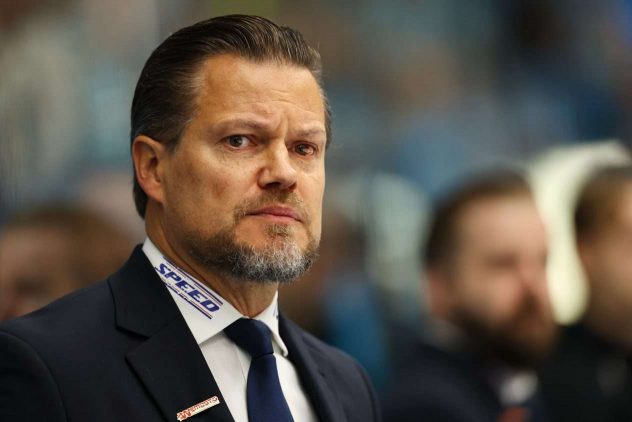
The strong autumn of the Pelicans has surprised many following the league. The Lahti team started the season with three consecutive wins, followed by a close 2–3 loss against Tappara.
SuomiKiekko interviewed Pelicans’ head coach Sami Kapanen before the Tappara match. He was also pleased with his team’s start.
– I like the atmosphere and readiness of the team. Results-wise, the games have started really well, but perhaps the bigger thing is that many of the things we’ve practiced are visible. We’ve taken steps forward, especially in offensive play compared to last year, Kapanen says.
Although only a few weeks of the season have been played, the Pelicans’ game has been surprisingly ready. Especially the team’s opening play has worked beautifully from the very first match.
– I give a lot of credit to my coaching team. Vellu [assistant coach Ville-Matti Koponen] and Teemu [assistant coach Teemu Leppänen] have done a lot of good work, but at the end of the day, it’s about the players. The players have bought into the playing style, have eagerly learned it, and have committed to it. Many times it feels like at the beginning, before things are absorbed, the practice is just okay, but when the game comes, it takes over.
According to Kapanen, there is still much to develop in Pelicans’ game, in every area. One thing he highlights is scoring.
– If we could improve scoring during those moments when we have chances, it would help a lot in the long run.
Kapanen does not believe that finishing is dependent on luck, but that successes in the offensive zone come as a result of hard work.
– It’s long-term, systematic training. We’ve also talked to the players about creating certain habits in their daily lives. In daily practices, there are quite a few opportunities to score goals. When scoring chances arise, the thought should be about how I can score a goal. Through that, a player can create a good feel and confidence for themselves. With a couple of young players, it seems that their shot has improved and their willingness to score has increased.
Pelicans’ Foreign Legion
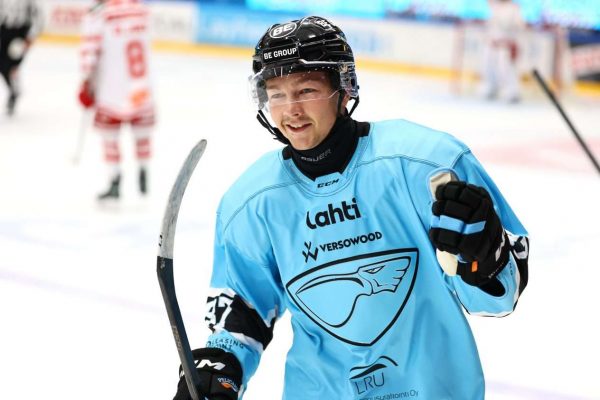
There has been much talk in the media about Pelicans’ foreign legion. This season, 12 foreigners are playing in Pelicans’ jersey, but it’s good to remember that some of them already have deep roots in Lahti. Captain Michal Jordan is playing his fourth season with the Pelicans, as is defender Johannes Johannesen. Goaltender Patrik Bartosak is such a beloved figure in Lahti that he could run for mayor after his hockey career.
However, the turnover in the Pelicans’ team has been high. New foreign reinforcements for the offense this season are Gabriel Fortier, Liam Hawel, and Oleksii Myklukha. The trio has opened the season strongly. What has been impressive is how the forward trio has already committed to the common playing style and plays for the team. Many other league locations are still struggling with the fact that foreign acquisitions do not really contribute to defensive play.
How has Pelicans managed to get the new acquisitions to commit to team play so quickly?
– The recruitment phase is essential: we know what we’re acquiring, the backgrounds have been reviewed, and we’ve considered personality types. At the same time, it has been firmly established that we go as a team. It starts from the first meeting, the first day, where the issue is raised that individuals are not bigger than the team. It shows what we as a coaching staff want, what we aim for, and what we ask from the team. So far, the team has shown that they buy into the concept well. Of course, it helps that results come right from the start. If we had lost three matches, it could easily lead to a player trying to come up with their own solutions to help the team, Kapanen says.
In Pelicans, team bonding has been done, among other things, through a joint training trip to the Jyväskylä area. There, the team spent four days together, players slept with roommates, ate together, saunaed, and played beach volleyball. Kapanen reminds that in the end, the responsibility for bonding lies with the players.
– If the guidance is always management- or coaching-centered, it doesn’t really work. I’ve heard through the grapevine that some of our more experienced players have organized things among themselves, grilled, and the kids have arranged playtime. All that togetherness brings a lot.
Has Kapanen’s own long NHL career helped in convincing North American players and selling the playing style?
– It probably doesn’t hurt. Just because I believe that from a North American perspective, an NHL background creates a certain belief that the coach understands what the player is going through, Kapanen reflects.
– Then coaching itself is very much dependent on personality, how you present yourself, how you speak, and how you treat them. I don’t see that an NHL background helps in that it makes a better coach.
In coaching, Kapanen wants to keep the package clear. Players know who the coach is responsible for what. Building a connection with the players is also important so that players can come and talk with a low threshold, and feedback from the coach is not just negative.
– The trust relationship and good communication help more than an NHL background.
LUE MYÖS:



Read more

- Tappara made a goalkeeper acquisition – a familiar golden lion caught!
- What is the secret to the success of the Pelicans’ foreign legion? This is how Sami Kapanen responds.
- Jokerit: a new goalkeeper has been revealed!
- MTV: Jokerit boss was enough – “Not sufficient for a winning level”
- Does Jokerit acquire a new goalkeeper? This is how Tomek Valtonen responds.
- Tomek Valtoselta harsh revelation about the state of the Jokers: “The fact is that…”
- Petteri Lindbohm opened his transfer to TPS – the question about Olli Jokinen left him speechless
- Petri Matikainen on the frightening injury of the JYP star: “He was taken to the hospital on a stretcher”
- The pain of the Jokers grows – JYP stole points from the home opener
- The Swiss Association strengthens – nets a man with over 600 NHL games